Official Publication · Neuroverse Field Intelligence

The Hopeful Monster

Neuroverse

Lexicon of Language

Declassified answers to questions the mainstream still struggles to ask correctly.

ADHD (Attention-Deficit/Hyperactivity Disorder) is a neurodevelopmental condition characterised by persistent patterns of inattention, hyperactivity, and/or impulsivity that interfere with daily functioning or development. It usually begins in childhood and reflects differences in brain development related to attention regulation, impulse control, and executive functioning. ADHD can continue into adulthood, sometimes presenting differently over time.
ADHD can affect how a person regulates attention, energy, emotions, and behaviour across everyday situations. People may experience:
    • Difficulty sustaining attention or completing tasks
    • Challenges with organisation, planning, or time management
    • Restlessness, fidgeting, or internal agitation
    • Acting quickly or impulsively, often without intention to disrupt
Experiences vary widely, and not all traits are present in every person.
Yes. ADHD is commonly described using three presentation types:
    • Predominantly Inattentive Presentation, where difficulties with focus, memory, and organisation are most prominent
    • Predominantly Hyperactive/Impulsive Presentation, where restlessness, impulsivity, and difficulty waiting or inhibiting actions are more prominent
    • Combined Presentation, where features of both inattentive and hyperactive/impulsive patterns are present
These presentations can change across the lifespan.
In adults, ADHD may be less visible and more internal. Adults may experience:
    • Cognitive overload or difficulty prioritising
    • Time blindness or inconsistent productivity
    • Emotional dysregulation or low frustration tolerance
    • Burnout linked to sustained effort and compensation
Many adults develop strategies to mask or compensate for ADHD traits. This may include overworking, relying on anxiety to function, creating rigid systems, or avoiding situations that expose difficulties. Masking can reduce visibility but often increases exhaustion.
ADHD is often missed when:
    • A person performs well academically or professionally
    • Symptoms are mistaken for anxiety, depression, or personality traits
    • Masking and compensation hide underlying difficulties
Late diagnosis can bring relief, validation, and re-interpretation of past experiences.
Diagnosis is based on clinical assessment. Generally:
    • Symptoms must have been present before age 12
    • Symptoms must persist for at least six months
    • Difficulties must occur in more than one setting
    • Symptoms must cause functional impairment, not just difference
ADHD is one of the most common neurodevelopmental conditions worldwide, affecting an estimated 5–8% of children, with many continuing into adulthood.
Yes. ADHD is a recognised neurodevelopmental profile and a valid lived experience. Within the Neuroverse lexicon, ADHD is understood as a difference in how attention, energy, and regulation operate, not a moral failing or lack of effort. Support needs do not disappear because someone is coping. Belonging does not depend on visibility.
AuDHD is an informal term used to describe the co-occurrence of Autism (Autism Spectrum Disorder) and ADHD (Attention-Deficit/Hyperactivity Disorder) in the same person. It is not a separate medical diagnosis, but a widely used and clinically recognised shorthand because the combined presentation is meaningfully different from having either condition alone. Autism and ADHD frequently co-occur. Research now recognises that many people meet criteria for both, although this overlap was historically under-identified, particularly in adults, women, and people who masked their difficulties.
People with AuDHD often experience competing neurological traits, such as:
    • A need for structure, predictability, and sensory regulation (commonly associated with autism)
    • Alongside restlessness, novelty-seeking, impulsivity, or time blindness (commonly associated with ADHD)
This can create internal tension, for example:
    • Wanting routine but struggling to maintain it
    • Periods of intense focus followed by sudden fatigue or burnout
    • High perceptual sensitivity and empathy combined with rapid overwhelm
Because both profiles are active simultaneously, daily functioning can be more complex and more exhausting than either condition on its own.
Many people with AuDHD develop strong masking and compensation strategies, consciously or unconsciously adapting to social, sensory, and cognitive demands. As a result:
    • Symptoms may appear inconsistent or contradictory
    • Strengths can hide support needs
    • People may be mislabelled as anxious, unreliable, lazy, or "high-functioning"
Recognition often occurs later in life and can bring both relief and grief, as past experiences are re-interpreted through a clearer neurological framework.
Yes. Although AuDHD is not a diagnostic category, it reflects a real, well-documented neurodevelopmental overlap. Many people find the term helpful because it accurately describes their lived experience and support needs. Understanding AuDHD can support:
    • More appropriate accommodations
    • Reduced self-blame
    • Better nervous system regulation
    • More sustainable ways of living and working
Yes. AuDHD reflects the lived reality of people who experience both autistic and ADHD neurology simultaneously. The term describes a distinct and well-recognised neurodevelopmental overlap, highlighting the experience of living with traits of both conditions, which can interact in complex ways. Symptoms of autism and ADHD can have a compound effect, intensifying challenges with attention, social interaction, and emotional regulation. Within the Neuroverse, AuDHD is understood as a nervous system managing competing regulatory needs, often at significant internal cost. The presence of contradiction does not invalidate experience. People with AuDHD belong in the Neuroverse in their own right, not as an exception or edge case. We are all AuDHD in the Neuroverse.
Autism (Autism Spectrum Disorder, or ASD) is a neurodevelopmental condition characterised by differences in social communication, sensory processing, and patterns of behaviour or thinking. It is present from birth, although it may not be recognised or diagnosed until later in life. Autism is not an illness and is not caused by upbringing. It reflects a different neurological profile rather than a failure of development. Autism exists on a spectrum, meaning there is wide variation in how it presents and how it affects daily life. Some autistic people require significant support in everyday activities, while others live independently but still experience differences in sensory processing, communication, or executive functioning. No two autistic people experience the spectrum in exactly the same way.
Autistic people may experience:
    • Differences in how social interaction and communication feel or function
    • Heightened or reduced sensitivity to sensory input such as sound, light, texture, or smell
    • Strong preferences for routine, predictability, or structured environments
    • Deep focus on specific interests, subjects, or systems
    • Differences in how emotions are processed, expressed, or interpreted
    • Fatigue from navigating environments designed primarily for neurotypical communication styles
Experiences vary widely. Some autistic people require substantial daily support, while others develop extensive strategies to manage independently, often at significant personal cost. The spectrum reflects many different neurological patterns, not a single presentation.
Autism is frequently missed or misidentified, particularly in women, girls, and people who develop strong masking strategies. Late recognition can occur because:
    • Diagnostic criteria were historically based on research conducted primarily with young boys
    • Masking, the conscious or unconscious imitation of neurotypical behaviour, can conceal autistic traits
    • Strengths in some areas may obscure support needs in others
    • Autism may be misinterpreted as anxiety, depression, personality traits, or behavioural problems
For many people, a late diagnosis brings both relief and grief, as earlier experiences are reinterpreted through a clearer neurological framework.
Yes. Autism is a recognised neurodevelopmental profile and a valid lived experience. Within the Neuroverse lexicon, autism is understood as a difference in perception, communication, sensory processing, and cognition, not a deficit or failure to adapt. Support needs do not negate intelligence or agency. Coping does not erase difficulty. Masking does not remove the need for understanding. Autistic people belong in the Neuroverse without qualification.
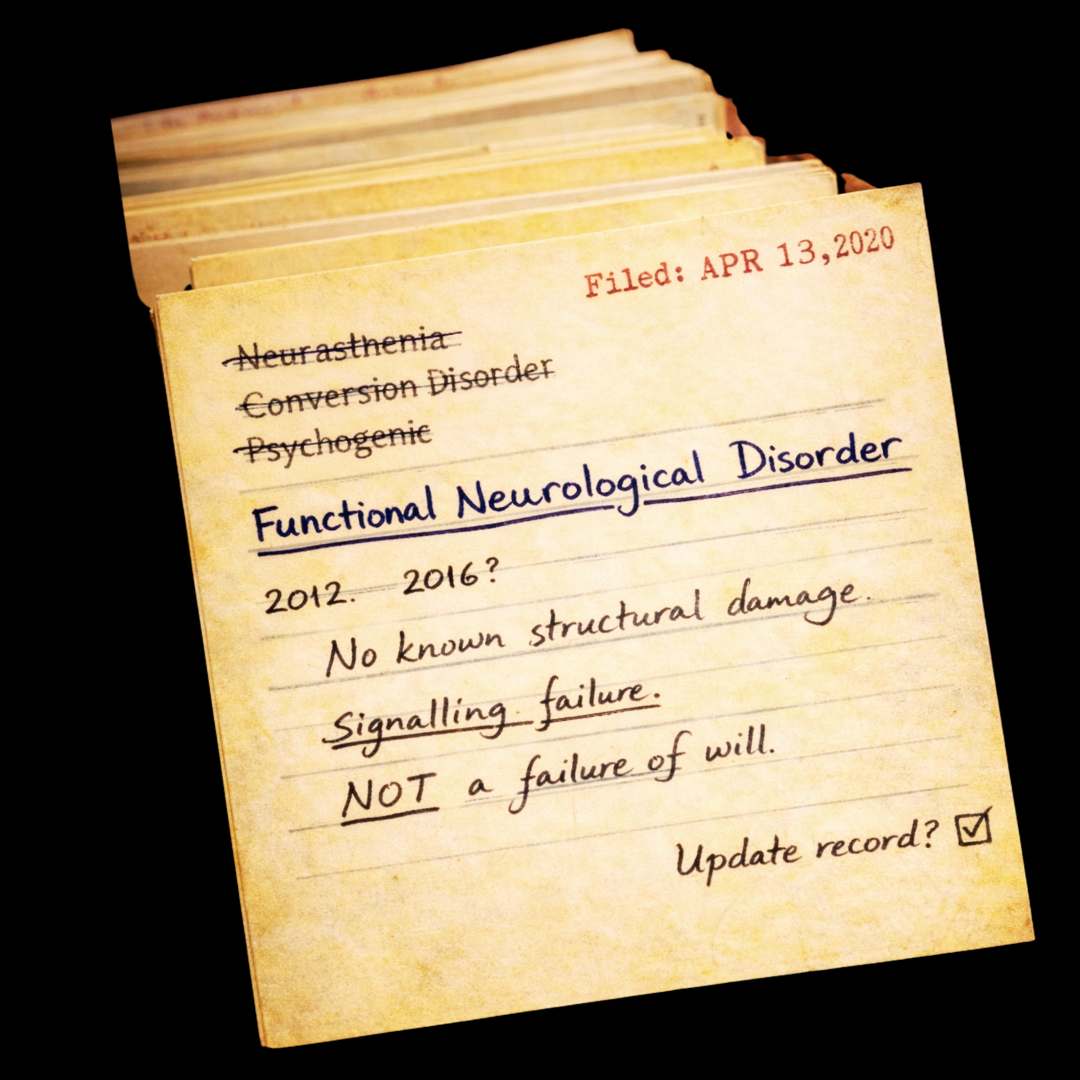
Functional Neurological Disorder (FND) is a problem with the functioning of the nervous system and how the brain and body send and receive signals. Physical and/or psychological risk factors can cause functional symptoms which include a variety of physical, sensory and cognitive symptoms that have yet to be explained by a recognised disease. Functional Neurological Disorders are considered to be multifactorial, meaning many different risk factors can contribute to the development of the disorder. FND refers to a neurological condition caused by changes in how brain networks work, rather than changes in the structure of the brain itself, as seen in many other neurological disorders.

Physical symptoms of FND are genuine but cannot be explained by changes in the brain structure. The exact cause of FND is unknown.

FND can affect movement, sensation, speech, cognition, and bodily regulation. Symptoms vary widely between individuals and may fluctuate over time.

Core Motor and Movement Symptoms

    • Limb weakness or paralysis, often affecting one side or one limb
    • Tremors (resting, postural, or action-related)
    • Dystonia (sustained muscle spasms causing twisting or abnormal postures), including laryngeal dystonia affecting the voice
    • Myoclonus (sudden, involuntary jerks)
    • Gait difficulties such as dragging a leg, unsteadiness, or sudden freezing
    • Functional tics or repetitive involuntary movements

Sensory Symptoms

    • Numbness or reduced sensation, sometimes in a glove-and-stocking or one-sided pattern
    • Altered sensations such as tingling, burning, or electric feelings
    • Visual symptoms including blurred vision, double vision, or functional blindness
    • Hearing changes such as muffling or distortion

Speech and Swallowing Symptoms

    • Speech difficulties including slurred, stuttering, whispery, jerky, or halted speech
    • Voice changes due to spasmodic dysphonia or laryngeal dystonia (strained, hoarse, breathy, or effortful voice)
    • Difficulty swallowing (dysphagia)

Cognitive, Autonomic, and Systemic Symptoms

    • Problems with memory, concentration, or processing speed (often described as brain fog)
    • Severe fatigue or physical and mental slowness
    • Dizziness or persistent postural-perceptual dizziness (PPPD)
    • Pain, including headaches, limb pain, or widespread pain
    • Bladder or bowel dysfunction

Seizure-Like Episodes

    • Functional (non-epileptic) seizures, which may involve shaking, unresponsiveness, collapsing, or altered awareness

Common Associated Conditions

Hypermobility, particularly Hypermobile Ehlers-Danlos Syndrome (hEDS) or hypermobility spectrum disorders, commonly co-occurs with FND. While not a core FND symptom, it may contribute to joint instability, subluxations, or dislocations; pain and fatigue; and symptoms that overlap with or amplify functional motor difficulties.

FND symptoms are real, but arise from disordered nervous system functioning rather than structural damage. Symptoms may vary day to day and can improve or worsen with attention, stress, or fatigue. Many people experience multiple symptom types at once. A neurologist experienced in FND can provide an individual assessment and diagnosis based on positive clinical signs, not by exclusion alone.

FND is classified as a rare disease. However, the exact prevalence is unknown, and the mechanisms which cause FND continue to be poorly understood despite its prevalence within neurological clinics. Some researchers claim that functional symptoms are among the most common presentations in neurological services. One report indicates approximately one third of outpatient neurology clinic attendances are patients reporting functional symptoms.
Despite the prevalence of FND, the exact cause remains unknown. Many different predisposing factors likely make patients more susceptible to functional symptoms. At the time of illness onset, precipitating factors may trigger or exacerbate FND symptoms, which then cultivate ongoing functional symptoms. Perpetuating factors likely begin to create new neuropathways, which could eventually cause changes in the brain. These neuropathways can be retrained with proper treatment and care. In the most recent fMRI studies, patients with FND showed decreased functional connectivity in some parts of the brain compared to their healthy counterparts. While these findings do not identify the predisposing factors to functional symptoms, they suggest a decrease in function between voluntary motor pathways and self-agency. An impairment of self-agency, or the sense that one is not in control of voluntary movement, is a defining characteristic of FND. These findings play a critical role in how patient symptoms are understood. Given the physiological evidence that functional movements are voluntary in nature, medical professionals have historically mistaken patients as feigning or malingering. Resting-state fMRI results lend support to an organic abnormality of functional connectivity in the brains of FND patients, consistent with patient exams and symptom reports.

On Psychological Factors

Historically, FND was viewed as an entirely psychological disorder resulting in physical symptoms caused by suppressed trauma. Psychological disorders and stressful life events, both recent and in childhood, may be risk factors for developing the condition in some patients, but they rarely provide a full explanation and are absent in many patients.

Patients do not have to be stressed, depressed or anxious to develop functional symptoms, nor must they have had an adverse childhood experience. Patients, physicians, and psychologists often fall into old paradigm traps searching relentlessly for underlying trauma that does not exist. It can be essential to address the possibility of psychological contributing factors for all patients. However, this approach should not negate the possible need and effectiveness of other treatment options.

Yes. Functional Neurological Disorder belongs in the Neuroverse because it is a real disorder of nervous system functioning, not a failure of character, effort, or belief. Within the Neuroverse, FND is understood as a condition where the brain and body's signalling systems are disrupted, producing genuine neurological symptoms without structural damage. The absence of visible lesions does not negate the presence of impairment. FND often exists at the intersection of neurology, psychology, trauma, and physiology. This complexity has historically led to misunderstanding, dismissal, and harm. The Neuroverse explicitly rejects interpretations that frame FND as imagined, exaggerated, or voluntary. Fluctuation does not imply fabrication. Inconsistency does not imply control. Recovery attempts do not invalidate severity. People with FND frequently mask symptoms, push through episodes, or appear intermittently "well." This does not reduce the reality of their condition or the legitimacy of their need for understanding, accommodation, and care. FND belongs in the Neuroverse because lived neurological experience is evidence. Because functioning is not proof of absence. Because invisibility is not invalidation. No further explanation is required.
Tourette's is a neurodevelopmental condition characterised by involuntary motor and/or vocal tics that begin in childhood. Tics are sudden, rapid, recurrent movements or sounds that are not purposeful, although some people experience an urge or build-up sensation before a tic occurs. Tourette's exists on a spectrum and varies widely in type, frequency, and impact.
People with Tourette's may experience:
    • Motor tics, such as blinking, facial movements, head or limb movements
    • Vocal tics, such as throat clearing, sniffing, sounds, or words
    • Fluctuating severity, with periods of increase and decrease
    • Increased tics during stress, fatigue, excitement, or sensory overload
Tics are not intentional, and suppression, when possible, often causes discomfort, exhaustion, or rebound increases later.
No. The portrayal of Tourette's as primarily involving involuntary swearing is inaccurate. This feature occurs in a minority of people with Tourette's. Most people experience non-offensive motor or vocal tics that are frequently misunderstood or misinterpreted as behavioural.
Tourette's often co-occurs with other neurodevelopmental profiles, including:
    • ADHD
    • Autism
    • Obsessive-compulsive traits
    • Anxiety
These overlaps can influence how Tourette's presents and how it is experienced day to day.
For some people, tics reduce with age. For others, they persist into adulthood. Adults may:
    • Mask or suppress tics in public settings
    • Experience increased fatigue or physical discomfort from suppression
    • Be mislabelled as anxious, disruptive, or inattentive
    • Avoid situations where tics attract attention or misunderstanding
Visibility may change over time, but support needs can remain.
Yes. Tourette's is a recognised neurodevelopmental condition and a valid lived experience. Within the Neuroverse lexicon, Tourette's is understood as a difference in motor and vocal regulation, not a behavioural choice or lack of self-control. Involuntary does not mean inappropriate. Visibility does not negate dignity. Control is not a prerequisite for belonging. People with Tourette's belong in the Neuroverse without apology.
Katherine Fouché, author

Author · November 2025

Spy. Strategist. Storyteller of the strange, sacred, and neurospicy.

Katherine Fouché doesn't just write — she reclaims. She tells stories the way she lives: with humour, bravery, and just enough magic to keep it interesting. The Canadian-South African storyteller spent her life building things: businesses, brands, safe exits, and the perfect toasted cheese and tomato sandwich. None of it came easily. Especially the toasted cheese and tomato. Behind the sharp humour and creative drive is a woman forged by necessity — someone who once had to "kill the fairy to eat." People always thought she was "weird," even in her most BAFTA-worthy people-pleasing years. Turns out, she was just ND. Diagnosed with FND at 52, Katherine didn't plan the plot twist. Her fast-paced marketing world had to slow down, and she found herself on a mountaintop — literally — with a rescue dog named Mac, a playlist prescription pad, and a growing urge to spy on her own survival like a field operative gathering intel for the misunderstood. Katherine's voice is raw, funny, and gloriously autistic — a lifeline for quiet rebels, the beautifully weird, the neurospicy, the misunderstood and the neuro-curious.
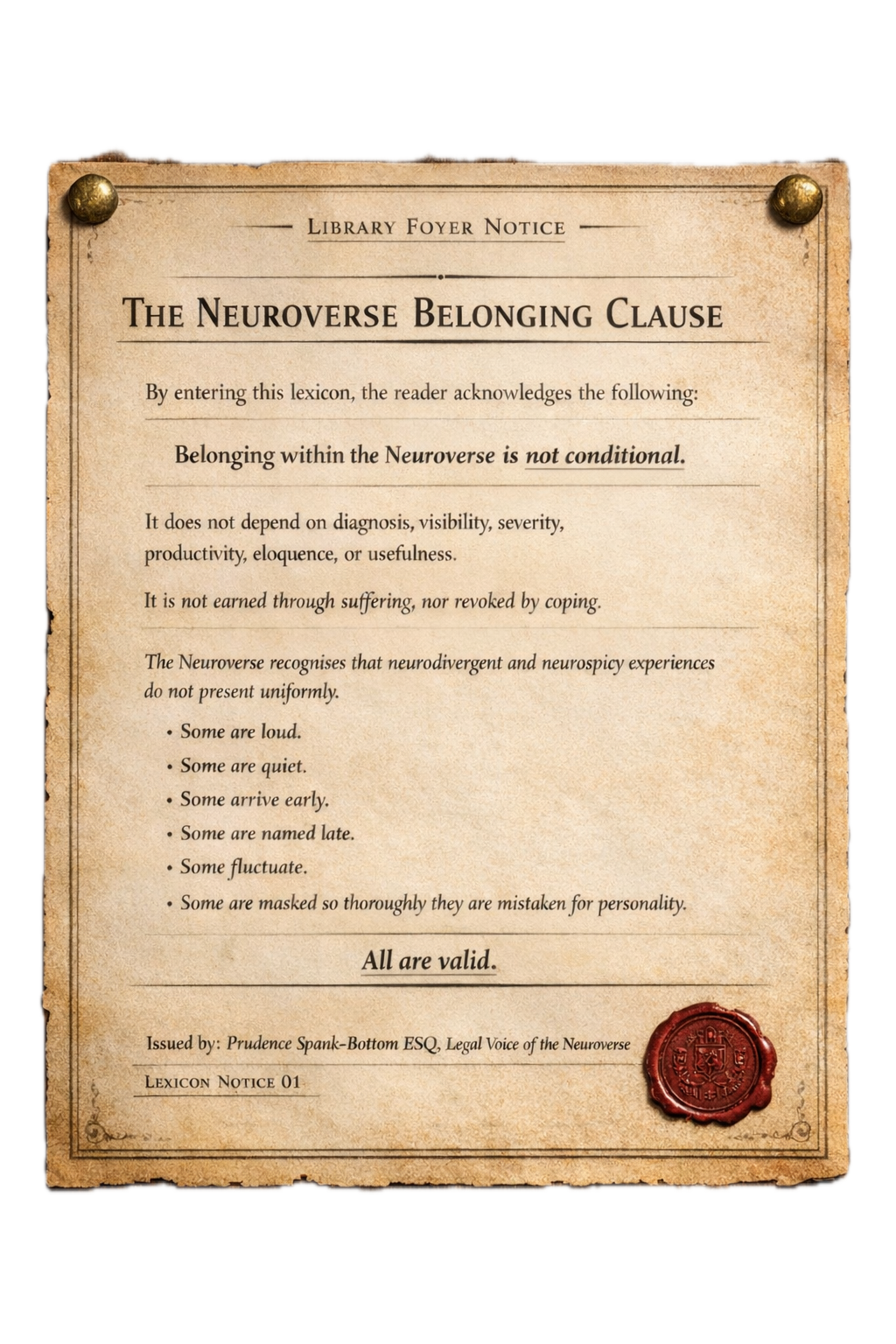
The Neuroverse Belonging Clause, issued by Prudence Spank-Bottom ESQ

Library Foyer Notice · Issued by Prudence Spank-Bottom ESQ Belonging within the Neuroverse is not conditional. Posted here because some things need to be said before you even sit down.

Hopeful Monster © 2026  ·  Sovereign Territory of Neurodivergent Minds  ·  All intelligence classified

LEXICON UPDATES

Dolphining is what happens when an ND person takes a deep internal dive mid-conversation and resurfaces somewhere else entirely.

From the outside, the connection is invisible. From the inside, it's perfectly logical, you just got there faster than anyone else could follow. It's not rudeness. It's not randomness. It's a monotropic mind doing what it does: tunnelling deep, then breaching. Dolphining is a much loved communication style in the Neuroverse.

Stimming is the unconscious repetition of movements, sounds, or sensations that helps a person regulate their focus, energy, and emotions.

Stimming is short for self-stimulatory behaviour.

A term describing an individual whose brain processes information in a way that differs from the societal "typical" standard.

In the Neuroverse, we see FND as a form of neurodivergence. This is not up for debate.